
Simone Weil, Iris Murdoch, and the Importance of Attention

Updated: Jul 12

A favorite quote of mine comes from Marcus Aurelius: "The soul becomes dyed with the color of its thoughts." He wrote this two thousand years ago, but it’s a reminder that we are shaped by the quality of our thoughts, and those, in turn, depend upon the nature of our experiences. What we attend to paints the mind.
Many people now spend most of their waking hours staring at a screen, often on social media. But what's online is not direct experience — it’s all vicarious, recycled, mediated spectacle created to grab and hold the viewer's attention and make other people money: the so-called “attention economy.” The thinking is done for you. There’s never any moment to pause and reflect on what matters.
How does one push back against these trends? And is it even worth it? Surrender is an option. The terms are generous. It won’t hurt much. What defense is there for someone in a world where the system is built on an addictive, tech-mediated way of being? Maybe this is just the way it’s going to be. All the signs point in that direction.
Of course, everyone must experience mediated reality to some extent — what are art, cinema, poetry, music, and literature but mediated experiences, after all? Yet it’s the quality that matters. Is it better to attend to beautiful things like the arts, nature, and embodied human relationships rather than to blur the days away on TikTok, Pornhub, and YouTube? I think so.
On that note, I came across an old Iris Murdoch essay from 1970, “The Sovereignty of the Good,” which once again forced me to wrestle with how best to use my attention. Less well known today than perennial fan favorites like Camus, Dostoevski, and Nietzsche, Murdoch (1919-1999) was an influential philosopher and a successful novelist in her own right who used fiction to tackle moral and philosophical themes.
She wrote 26 novels and numerous philosophical essays over almost half a century. Critical to her philosophy is the concept of attention and its role in shaping our moral lives. In "The Sovereignty of Good," Murdoch drew upon the ideas of French mystic Simone Weil. But unlike Weil, Murdoch wasn’t interested in annihilating the self, or “decreating” into God through suffering (“affliction”), but in navigating the complexities of life.
I’ll be honest, I’ve always been both drawn to and repulsed by Weil, whose mystical writings and cinematic biography masked a deceptively huge ego, a topic I covered a few years ago to the general disgust of Weilophiles everywhere (sorry, not sorry).
When reading Weil’s later writings (1940-1943), I always hit a frustrating wall of incomprehensibility. Perhaps mine is a typical human response to the alienness of someone who is uncompromising in living out their ideals.
I confess that might be true.
But for all her talk of love, I've always felt an overly abstract quality to her thinking that's left me cold. If I'm looking for a better way to live and flourish, and to use my attention to that end, Weil can only take me so far.
That’s where Iris Murdoch comes in. She found value in Weil, a depth in her thinking that, even if incomplete (Weil died at 34) or misguided, still offers insights into living a more virtuous life. Murdoch took Weil’s thoughts on attention and found a way back into the warm sunshine of life, love, and goodness. That's made me give Weil a second, more sympathetic look.
Murdoch is the artist, Weil the saint in this story. Artists show us beauty; saints teach us moral excellence. We're going to need both as our civilization descends deeper into some semblance of Plato's cave with glowing touchscreens.
That’s what I want to explore below: what Weil wrote on attention, how Murdoch later humanized it, and, briefly, what this all means in a world overrun by screens.

Weil on Attention
When we think of attention, we think of focus and concentration on something. This is not what Weil is talking about. Not even close. While she acknowledges that focused attention (she calls it a “muscular effort”) has its place, she believes there’s another type that has deeper spiritual implications. It’s more of a disciplined, passive openness, a waiting, an expectant receptivity to everything that exists beyond us — ideas, people, situations, and concepts. Or, reality.
In her own words: “Attention consists of suspending our thought, leaving it detached, empty, and ready to be penetrated by the object; it means holding in our minds, within reach of this thought, but on a lower level and not in contact with it, the diverse knowledge we have acquired which are forced to make use of….Above all our thought should be empty, waiting, not seeking anything, but ready to receive its naked truth the object that is to penetrate it.” (1)
Notice how passive (almost sexual) this all sounds — “ready to receive its naked truth…ready to be penetrated.” She’s not saying there’s no effort in this, for to maintain such a coiled, suspended state of active passivity requires the suppression of the ego, no easy task. “Attention is an effort, the greatest of all efforts perhaps, but it is a negative effort. Of itself, it does not involve tiredness.” (2)
According to Weil, this is the only way to create space within ourselves to encounter a more pristine reality, untainted by the ego. Weil, who loved paradoxes, might say this was paying attention without concentrating, or effort without strain. If you play music or like painting and drawing, which reward this kind of attention, you'll know what Weil's talking about.
Her most detailed discussion of attention comes from a 1942 essay called “Reflections on the Right Use of School Studies with a View to the Love of God.” She believed nothing mattered more in education since “the development of the faculty of attention forms the real object and almost the sole interest of studies.” (3)
She asks us to consider a student struggling with a difficult geometry problem. After an hour, the solution still eludes her. Still, the time has not been wasted. The very act of more passively contemplating the problem, or attending to it by waiting for insights, is a spiritual practice, for “this apparently barren effort has brought more light into the soul.” (4)
In other words, the practice of sustained thinking is never wasted, even when it does not yield a solution, for it trains us to step back and contemplate complex problems (like existence or the nature of God) rather than racking our brains trying to make it all make sense. “It is only effort without desire (not attached to an object) which infallibly contains a reward.” (5)
It’s not that easy, though. The biggest barrier to “suspending our thought” will always be the grasping ego. Both Weil and Murdoch understood this well. If attention is the ego directing the will like a limb to interpret reality for its own purposes, then those interpretations are prone to self-serving distortions.
Through the ego filter, I’m not seeing something or someone as they really are, but as I want to see them. It’s a kind of distortion field we project onto reality. Everyone does it to some degree.
There’s something obvious Weil is implying here, though we don’t consider its ramifications enough: What we attend to and how we do so define our reality, shape our minds, and reveal our priorities. Also, who we devote our attention to is an expression of love, and vice versa for those who attend to us.
The practice of Weilian attention (muted ego, suspension of thought, empty openness) empowers us to perceive others more clearly, and not only as transactional non-player characters who exist only as a chorus in the soundtrack of our lives.
But Weil puts a heavy emphasis on the tribulations, the malheur, as she calls it, which can be translated as "affliction." As she notes, "The capacity to give one's attention to a sufferer is a very rare and difficult thing; it is almost a miracle; it is a miracle. Nearly all those who think they have this capacity do not possess it." (6)
This is a recipe for radical empathy and humility. She's absolutely right, though: most of the suffering in the world goes unnoticed, from the meat that ended up on our dinner plates to the shaggy homeless dude sitting at the busy intersection that everyone passes through on the way to work with barely a second thought.
Weil would have us understand that affliction (ours and others') is counterintuitively the key to redemption. It’s an effective soul purifier. “We should seek neither to escape suffering nor to suffer less, but to remain untainted by suffering.” (7)
This may sound familiar, for it has a long and storied pedigree. It shares a family resemblance with other ascetic traditions — Christian, Hindu, and Buddhist — that distrust the grasping self as a barrier to clear, undelusional vision. It’s also worth mentioning Plato’s evocative allegory of the Cave again, about which Weil and Murdoch were both quite familiar, which calls upon us to ascend from this world of illusions to experience true reality. What these ideas share is the belief that reality is distorted by the self, its uncontrolled appetites, fears, fantasies, and the overwhelming will to possess other people and things.
But there's more to it. Attention is also an ultimate expression of love for Weil. She's spot on here, and it makes sense. When you give your full attention to someone else, you acknowledge their reality. You make them real in a way. You see them. You even love them a little each time you do so.
We all have friends, colleagues, or family members in our lives who are there but rarely present, who aren't listening when you speak. It is a bit deflating, isn’t it, when you realize that you don't have any more than 49.9% of someone’s attention? It's worse when you love that person.
In this sense, you only partially exist to them. Their love is incomplete and fragmented. They haven't made you real to themselves. One might be forgiven for asking: “If I am ignored, do I therefore exist?” That’s the real attention deficit disorder, and no pill can make it go away. Weil writes, "Those who are unhappy have no need for anything in this world but people capable of giving them their attention." (8)
Yes, amen to that!
But consider the other side. Sometimes, though not enough, we encounter a person who actually regards us. They attend to us, as Murdoch would say. It's so invigorating after becoming accustomed to all of the default indifference out there. To be noticed. To be acknowledged. To be loved! To be attended like this — ah, it feels like sunbeams on a chill winter day.
Cue Handel's Messiah! Hallelujah!
Weil, to her credit, was one of those people who gave you her undivided attention. Perhaps too much. The poet Jean Tortel met her during her time in Marseilles (October 1941 to May 1942) and wrote down his impressions. She looked on “…with an intensity and also a kind of questioning eagerness that I have never encountered elsewhere….She spoke with a calm, soft voice, slowly, revealing her slightly decayed teeth. It was as though she wanted to encircle and keep her interlocutor with her - as though, I sometimes thought, she was trying to wrap him up.” (9)
Gustave Thibon, a Catholic farmer-philosopher who hosted Weil on his farm in 1942 and who later collected her writings into what became Gravity and Grace, praised her gifts as a teacher (she tutored him in Attic Greek). Thibon captures how attentive Weil was with others: “She knew how to place herself on the level of any pupil whatsoever…and brought to the task…that quality of extreme attention which, in her doctrine, is closely associated with prayer.” (10)
Thibon came to revere and venerate Weil, while also being refreshingly frank about her shortcomings. Something else he wrote captures my own reservations. It’s worth quoting at some length, for it gets to my earlier point that she can move us only so far in finding and applying a method of attention that is both virtuous and colors our souls with beauty.
Thibon wrote: “This soul [Weil's], who wanted to be flexible to every movement of the divine will, could not bear the course of events or the kindness of her friends to change by one inch the position of the stakes with which her own will had marked her path of immolation. Though utterly and entirely detached from her tastes and needs, she was not detached from her detachment. And the way she mounted guard around her emptiness still showed a terrible preoccupation with herself. In the great book of the universe spread often before her, her ego was, as it were, a word which she may perhaps have succeeded in effacing, but which was still underlined.” (11)
Of course, Weil had her own problems with the selfish ego. She realized this. Those who accepted and loved her did as well. Thibon, who understood her quirks better than most, went on to describe her opinions as “barred and bolted,” implying that she was less open, or at least inconsistent, in practicing the very form of attention she preached. (12)
Thibon noted Weil’s tendency to seek out misery-inducing situations that would impose the most suffering on her frail, clumsy, near-sighted body. A few years earlier, she had quit teaching and forced herself to work in a factory when she didn’t need to. This was unfortunate, for as a teacher, she had been in a position to train the next generation on the use of their attention. She chose instead to pursue her quest for self-abasement and martyrdom, a quest that would continue in various guises all the way to her death. This spiritually farsighted woman could intellectualize an emotional response to the suffering of anonymous people around the world, yet at times she could be remarkably self-absorbed and insensitive in her close personal relationships.
In the fall of 1941, she volunteered to do manual labor in Thibon’s vineyard during harvest. At this point, though, she had been banned from teaching by the Vichy regime because she was a Jew, so her work opportunities were sparse. When offered a place to stay as a guest in his house, she refused and instead moved into a ruined shack a few kilometers away, down by the Rhone River, at some inconvenience to Thibon and his family. (13)
When Weil sought Thibon’s help to lock in a farm labor job for the next year (1942), she asked him to find her something where the conditions would be difficult for her. She didn't want any slack cut for her, but to work like a regular field hand.
Thibon, astutely, asked her why she was always “sifting her destiny,” always “putting as much study and calculation into the pursuit of affliction as mediocre souls do into their search for comfort and pleasure.” (14)
I was kind of thinking the same thing.
Weil’s response captures her entire religious worldview. According to Thibon, she replied that “her vocation was to go to God through affliction and nothingness.” (15) This “vocation” was how Weil ultimately meant to use her attention.
All this is to say, for Weil, attending to one's suffering was the road to salvation, and only the afflicted could understand the true suffering of others, to "see what they were going through." That's all true, there's valuable wisdom here, but it's so narrowly focused on one aspect of the human experience to the exclusion of everything else.
Indeed, the more Weil drifted into mysticism and religious belief during her final years (1940-1943), the less consideration she took for the people in her life. Her embrace of suffering as a core spiritual practice is understandable given the debilitating migraines she suffered from, but it's not a path I'm keen to follow.
And here I am again, back up against that wall of incomprehensibility.
So what did Murdoch have to say?

Murdoch on Attention
Murdoch admired Weil and acknowledged the ways in which she shaped her own thinking on attention. (16) But unlike Weil’s mystic quest for self-immolation, Murdoch preferred to embrace life in all its messy, dramatic chaos. Her 79 years and 26 novels were filled with it.
I find her much more relatable. The purpose of attention, as we saw with Weil, is to train for a spiritual life that brings one closer to God. (17) Murdoch would have us focus on the Good rather than on God. This difference in orientation matters. Indeed, this represented a rare criticism that she had of Weil, whose philosophy always ended up in theology, which "is awkward for me as I don't believe in God." (18)
Drawing on Plato, the Good is a kind of secular stand-in for God. It's a fuzzy, hard-to-define, aspirational abstraction as well. For Murdoch, the Good is a transcendent moral reality of perfection that can draw us out of selfish fantasy and teach us to see the world, other people, and ourselves more truthfully, justly, and lovingly.
While Weil’s attention seeks God through affliction, Murdoch’s orients toward the Good through truthful perception. This idealized version centers on “the idea of a just and loving gaze directed upon an individual reality.” (19)
You see the difference? It's about how we relate to each other, not God.
Also similar to Weil, "unselfing" the ego is critical. However, Murdoch orients attention toward the Good, and toward all the beauty and excellence that actually exist. The focus isn't only on affliction. Awareness of beauty mutes the ego and turns attention outward toward something real and independent of the self. What we attend to determines our moral stance.
Not only that, but becoming aware of external beauty is both humbling and uplifting in obvious ways, for we get to experience excellence existing outside ourselves, demonstrating how much more there is to reality than our petty little desires could ever imagine.
It can take quite a simple form. In "The Sovereignty of Good," she gives an everyday personal example of this kind of unselfing in the face of beauty, in this case from the natural world.

“I am looking out of my window in an anxious and resentful state of mind, oblivious of my surroundings, brooding perhaps on some damage done to my prestige. Then suddenly I observe a hovering kestrel. In a moment everything is altered. The brooding self with its hurt vanity has disappeared. There is nothing now but kestrel. And when I return to thinking of the other matter it seems less important.” (20)
This should sound familiar. We’ve all been there. We’ve all had our “kestrel” moments, some routine experience of unselfing, of what Murdoch calls “self-forgetful pleasure.” (21) The hovering kestrel exemplifies natural beauty, and for a few minutes, it silenced her inner monologue of resentment and anxiety. It restored the world as something independent of her ego. Murdoch argues that we should fill our lives with more kestrel moments.
Nature is an easy agent for unselfing. It’s why we often feel invigorated just by being outside, under the sun or the stars, among singing birds, and in the fresh air. You won’t have that feeling by sitting in an air-conditioned room and staring at a screen all day and all night. The beauty of nature is the most accessible starting point for attending to beauty in our lives.
Another means is excellent art. This is not as easy. Nature simply exists as a kind of default beauty that we can all enjoy in some way. Art, however, is human-made and so ranges across a spectrum from masterpiece to competent, mediocre, and downright awful (alas, so much of the last two). Art is also a mediated aesthetic experience, so its quality is important.
But now we’re deeper into the realm of the subjective than we were with nature, and with that come some challenges.
Evaluating art is a tricky affair. Who's to judge? And yet we collectively do, at least as a culture, come to some broad consensus on what's worth being called great art and what's best forgotten. Not everything ends up in a museum or a Penguin Classic, nor does it deserve to be.
Someone who never views visual art, reads literature or poetry, or has any interest in music is unlikely to have sophisticated tastes in those areas. They might have opinions, as we all do, but they'll run no deeper than "I like that," or "I don't like that," and it'll usually be the latter, especially if it's in any way challenging.
However, Murdoch argues that the more we focus on art, read quality literature, and engage with the best thinkers and creators, the more discriminating and sophisticated our tastes will become. This, for Murdoch, nudges us toward the Good.
She believes this is beneficial for us. “In intellectual disciplines and in the enjoyment of art and nature we discover value in our ability to forget self, to be realistic, to perceive justly. We use our imagination not to escape the world but to join it, and this exhilarates us because of the distance between our ordinary dulled consciousness and an apprehension of the real.” (22)
The most enduring artists have an uncommon gift for detached attention. They combine advanced technical mastery with an ability to unself and capture a bit of raw reality that they present to us in symbolic or metaphorical form. They grasp something about the world that’s true but difficult or impossible for the rest of us to express — though we might sense it on some level. Weil called this an example of anamnesis, or "an orientation of the soul toward something which one does not know, but whose reality one does know." (23)
Murdoch wrote, “Art then is not a diversion or a side-issue, it is the most educational of all human activities and a place in which the nature of morality can be seen. Art gives a clear sense to many ideas which seem more puzzling when we meet with them elsewhere, and it is a clue to what happens elsewhere.” (24)
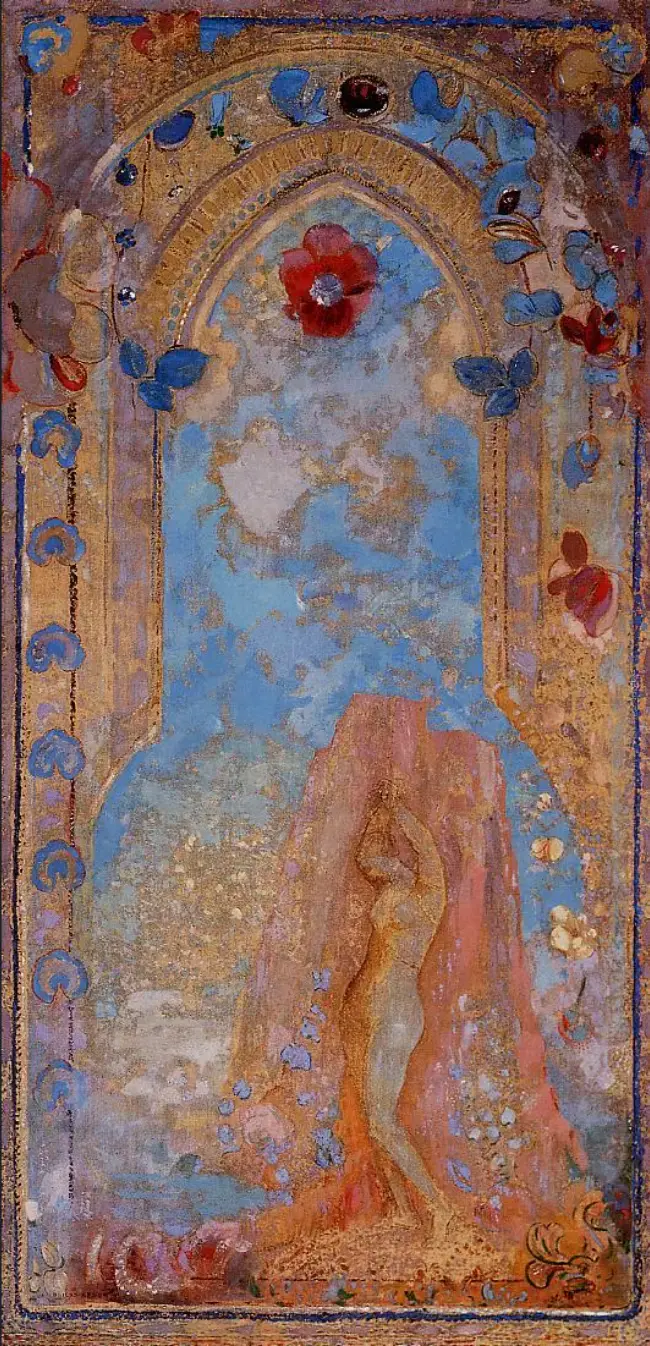
This is how Murdoch, perhaps more than Weil, would have us focus our attention, outward from ourselves, directed toward beautiful things of excellence in this world. Art and nature thus attended to demonstrate the awe-inspiring complexity of the world, far more than our ravenous little egos could ever hope to understand alone.
That all sounds quite pleasant, doesn't it, like I'm writing a brochure for an art museum or yet another passionate defense of the humanities. But this connection between attending to beauty and living a morally virtuous life wasn't immediately obvious to me.
Everyone knows that the best art is often made by morally problematic people. Picasso was a generational talent but a deplorable human being, particularly toward women. Charles Dickens was kind of a dick. Ernest Hemingway was an even bigger one, perhaps the biggest of them all. Virginia Woolf’s cruel and elitist snobbery is legendary. Ezra Pound, for all his lofty, highest-of-high-brow intellectual refinements, became a vulgar, antisemitic radio propagandist for Mussolini’s regime during WWII. Such a genius, but my god, what terrible judgment!
I could go on, but you get the point. Artistic mastery doesn’t equal moral excellence. Not even close. That the greatest artists are almost never the best human beings is something too obvious to dwell on.
This contradiction between meaningful art coming from flawed individuals seems confounding, but it needn’t be. Murdoch is firmly in the camp that a work of art's value exists independent of its creator. I agree. I mean, the alternative is canceling just about every artist who's ever lived. That's absurd. Transformative art can involve genuine moments of unselfing without implying a unselfed life from its creator.
The most talented artists are able, at least in the narrow sense of their craft, to unself their attention during the creative process and bring back something original. What they create is like a birth: from them, unique to them, stamped with their creative DNA, but ultimately independent of them: a stand-alone object in the world. The artist eventually dies; a work of genius can attain a kind of immortality.
Therefore, judge the art first and the artist after. Because, as Murdoch puts it, “If quality of consciousness matters, then anything which alters consciousness in the direction of unselfishness, objectivity and realism is to be connected with virtue.” (25) That includes excellent art from terrible people.
Let me flip this around. Are the most moral people really the best placed to express the contradictions and nuances of existence? Could they even? Surely some do. But if this were the case, wouldn't saints be the best artists, and philosophers would be exemplars of moral excellence? They're clearly not.
Perhaps some morally compromised people are uniquely suited to have the clearest of vision and originality, which is another way of seeing reality as it is, good, bad, and, often, quite ugly.
That said, Murdoch admired the moral ambitions of the saints, people like Weil, for example, who strove to live out their ideals, no matter the cost, and much to the wonder, exasperation, and discomfort of the rest of us. Murdoch believed a kind of dualistic tension exists inside all of us, between the saint and the artist, that can never really be resolved.
But that's not to say we can't examine the credibility of the artist who conceived the ideas, especially if they're giving us moral or spiritual advice. I've already discussed a few of Weil's shortcomings. What about Murdoch?
Two pictures emerge. The first was that of the younger Murdoch, the attractive and charismatic "vamp" in her 20s and 30s. Not everyone liked her then, especially the wives of the older mentors she became too close to. To them, she was a callous "wrecker" who "ate people up." (26)
In 1953, she noted in her journal: "I have a rather considerable capacity for dividing my mind (rather my heart) into compartments and giving apparently a full attention to a number of people at once. Then, as now, I am suddenly trapped - & this causes pain for others." (27)
In a 1945 letter to a friend, she confides that she has "a tendency to want to be loved, and not engage myself in return." (28) In other words, she wants to get attention more than give it, the usual sign of a selfish ego. She knew this better than anyone.
I don't want to make it sound like Murdoch belongs in my paragraph of artistic genius-monsters. She doesn't. On the contrary, she disproves the lazy generalization that meaningful art is only made by problematic people with kaiju-sized egos.
By all accounts, Murdoch was a generous, decent, compassionate human being throughout her long life with few enemies and many devoted lifelong friends. A saint? No, of course not. But she was remarkably self-aware, self-critical, and self-correcting — a triad rarely found in a single person. She worked hard to lovingly attend to the people in her life. She did this better than most.
The attentional asymmetry of her early relationships was more than countered by the symmetry of her very happy 43-year marriage to John Bayley, one marked by a comforting "mutual taken-for-grantedness" — which is, I firmly believe, the best kind of marriage. (29) Only death did them part.
The more mature Murdoch understood that her attention wasn't an infinite resource but a limited one that needed to be managed. She poured her attention into her novels and into a small but tight circle of intimate friends. Murdoch's entire life was a supreme example of her recommendation to attend to beauty, excellence, and great art. She did her best to practice what she preached through it all.

Final Thoughts: Attention Against the Machine
This brings me to two rather unsurprising conclusions. The first is that Murdoch and Weil were correct: attending to beauty in art and nature, cultivating mutually rewarding human relationships, and seeking the sublime and the divine (however defined) are disciplines worth developing.
I would go further than that. It needs to be a calling. It was for Iris Murdoch and, in a different way, for Simone Weil as well.
Why? Because I'm convinced the technological civilization that has emerged in the twenty-first century is trying to put us all in a trance, erasing any sense of personal past or future, alienating us from nature and trapping us like prisoners in a chirping, cacophonic, perma-present Platonic cave. In this world, poetry, human intimacy, and even physical contact begin to feel like icky artifacts from a more tender age. It's a world of screens mediating unlimited porn, omnipresent consumerism, and infinite, scrolling distraction, all resulting in a profound spiritual emptiness and loneliness.
Online platforms and the parasocial pseudo-relationships they foster won't ask, “What are you going through?” Or, if they do, they won't ever hear your response. They'll never attend to you at all. They'll instead ask, “What's it gonna take to keep you here?" — glued, glazed, and stupefied instead of attending to what's all around. Our attention is the lifeblood that feeds these vampires.
And so, a second conclusion follows: if it's possible to dye the soul with beauty and love, it's just as possible to taint it with all that is ugly, vulgar, mediocre, and angry. The entire online distraction industry has designed itself to make that choice feel easy, even inevitable, by camouflaging the ugliness as harmless fun.
Either way, it's still a choice. It has to be if human freedom still means anything at all.
Works Cited
Chenavier, Robert. Simone Weil, attention to the real. Notre Dame, Ind: University of Notre Dame Press, 2012.
Conradi, Peter J. Iris Murdoch: A life. New York: Norton, 2001.
Du Plessix Gray, Francine. Simone Weil. London: Weidenfeld & Nicolson, 2001.
McLellan, David. Utopian pessimist: The life and thought of Simone Weil. New York: Poseidon Press, 1990.
Murdoch, Iris. Metaphysics as a guide to morals. London: Vintage, 2003.
Murdoch, Iris. The Fire & The Sun: Why Plato banished the artists. London: Oxford University Press, 1978.
Murdoch, Iris. The Sovereignty of the Good. New York, New York: Routledge, 1970.
O’Connor, Patricia J. To Love the good: The moral philosophy of iris murdoch. New York: P. Lang, 1996.
Perrin, Joseph Marie, and Gustave Thibon. Simone Weil as we knew her. London: Routledge, 2003.
Pétrement, Simone. Simone Weil: A life. London: Mowbrays, 1977.
Weil, Simone, Joseph Marie Perrin, Emma Craufurd, and Leslie A. Fiedler. Waiting for god. New York: Harper Perennial Modern Classics, 2009.
Weil, Simone, Joseph Marie Perrin, Emma Craufurd, and Leslie A. Fiedler. Waiting for god. New York: Harper Perennial Modern Classics, 2009.
Weil, Simone. Gravity and Grace. Lincoln: University of Nebraska Press, 1997.
Weil, Simone. Selected essays 1934-1943: Historical, political, and moral writings. Wipf & Stock Publishers, 2015.
Zaretsky, Robert. The subversive Simone Weil: A life in five ideas. Chicago: The University of Chicago Press, 2023.
Endnotes
1. Simone Weil. Waiting for God, 62.
2. Ibid.
3. David McLellan. Utopian Pessimist, 183.
4. Weil, Waiting for God, 58.
5. Simone Weil, Gravity and Grace, 170.
6. Weil, Waiting for God, 64.
7. Weil, Gravity and Grace, 132.
8. Weil, Waiting for God, 64.
9. McLellan, 165.
10. Francine Du Plessix Gray. Simone Weil, 167.
11. Joseph Marie Perrin and Gustave Thibon. Simone Weil as We Knew Her, 112.
12. Perrin and Thibon, 113.
13. Ibid., 110.
14. Ibid., 122.
15. Ibid.
16. Iris Murdoch. The Sovereignty of the Good, 40.
17. Weil, Waiting for God, 61.
18. Peter Conradi. Iris Murdoch: A Life, 456.
19. Murdoch, 41.
20. Murdoch, 92.
21. Ibid.
22. Ibid., 98.
23. Iris Murdoch. Metaphysics as a Guide to Morals, 505.
24. Murdoch, The Sovereignty of the Good, 96.
25. Ibid., 92.
26. Conradi, 373.
27. Ibid., 386.
28. Ibid., 283.
29. Ibid., 459.
-----
PDW
Dry Grove, Illinois
July 2026


